comfort

Oh blankets

Soft warm oracles of sleep

You know how to wrap me in contentment

Your powers defeat all of my poetic desires

You gather me up and swathe me in unruffled slumber

Wherein I will weave wordless verses in my dreams

A tired poem to finish Day Sixteen of Na/GloPoWriMo.

Accommodations

Gate opened before
Your fiery approach
Were you hoping to crash through?

Front stoop adorned with
Gladiolus – her namesake
Did that transplant your perennial presumptions?

Windows shining like
Dark crescent eyes with wrinkled corners
Did they reflect back your insolence?

Door speaking softly
Swinging inward upon this vestibule
Did that cause you to be so unhinged?

Vibrant edges rounded by
Centuries of discrimination
I’m sorry, did she somehow steal your thunder?
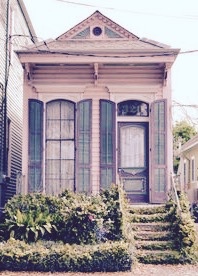
Day Thirteen of Na/GloPoWriMo challenges us to write a poem about a non-apology for something stolen. This “sorry-not-sorry” poem is based on the accommodation that people of color make daily in the face of white privilege, and in particular it is inspired by a dear wise woman with whom I’ve had the honor to work.


Rooms

Our rooms sometimes contain us well
But sometimes isn’t every day
The sunny windows, walls eggshell
Our rooms sometimes contain us well
On shelves our boxes neatly dwell
They hold what’s lacking tucked away
Our rooms sometimes contain us well
But sometimes isn’t every day

Day Twelve of Na/GloPoWriMo challenges us to write a triolet.

Strings of memories

Remember
When we
Acted out storybooks

I
Was Gerald
You were Piggie

Snuggled
Most mornings
On the couch

Walked
The path
By the river

Sang
Happy Birthday
On a screen

Put
Training wheels
On your bike

Planted
Seeds for
An unknown future

Tied
Knots as
The world unraveled

Day Ten of Na/GloPoWriMo challenges us to write a hay(na)ku. “A hay(na)ku consists of a three-line stanza, where the first line has one word, the second line has two words, and the third line has three words.” I’ve strung together memories that I want to save from this time spent together-apart.

Word on the Wing

As my morning soles cling to the sidewalk
The streets stretch vacant
Save the occasional passing car

The morning briefing from the branches
Is published in the breeze
It’s pressed in the mist over the river
Where it’s drawn back up into circulation by the rising sun

Too-wheeted in a flurry of whistles and calls
The treetop headlines reign over the quiet streets
And I wonder what they report:

The Forsythia have reached their peak of flowering, azaleas are beginning to bud

Squirrels report lowest number of deaths in decades

Two legged concrete-dwellers remain in their nesting boxes…

Day Seven of Na/GloPoWriMo challenged us to write a poem based on a news article. I instead chose to imagine what kind of news the morning bird calls herald. I am struck lately with the vibrancy of their song in the relative stillness of the world these days.

Felis catus solis

Small furry ball of fire
pouncing to the top of trees through the early morning window while
waiting for me to stir
then tiptoes up my side and
sits like a soft statue on my hip
sniffing my musty morning breath.

Pa-dump, pa-dumping adeptly
before me down the stairs and through the kitchen
she is Helios with a tiny sun on the tip of her tail
singing a sweet tangerine scented meow.

My cloudy eyes seek out kettle, cup and masala tea to lift
the morning mist. Meanwhile
she weaves her slender charioted requisition longingly
through my legs. Once fulfilled, I sip
as she consumes tidbits to fuel her inner fire, whereby the Poynting flux
propagates into her corona through the buffeting of magnetic fields by turbulent connective cells
. In other words
the zoomies are unleashed! –
ricocheting from floor to ceiling
sending sparks simultaneously shooting
from the pads of her paws and the tip of her tail.

Her solar wind engulfs all the tiny planets of our atmosphere
scurrying small objects, scooting over the floor
until at last it subsides
settling sleepily like the small umbral grey spot
on her left haunch.

And she retreats
creeping under clouds of blankets to her camera obscura
where she will dream that she is painting glimmering specs
over rippling waters full of fluttering fish.
Until after hours of hazy slumber she emerges
to eclipse the advancing evening.

The prompt for Day Five of Na/GloPoWriMo challenges us to incorporate “Twenty Little Poetry Projects” (a list originally developed by Jim Simmerman) into one poem. This was a challenge indeed! I’m sure I didn’t include all twenty projects, but I think I hit most of them. Our sprightly cat, Sunny (pictured above) provided the inspiration for my poetic attempt at this challenge. She is bright orange and white with just one small grey spot on her back left hip which I find intriguing – a little umbral fleck in her sunny disposition. She came to us at Christmas when our spirits needed a little ray of light!

The text in italics in the third stanza is taken from this abstract of an article in Nature Astronomy. Science has its own dialect that I don’t often understand!

Here is the list of projects:
1. Begin the poem with a metaphor.
2. Say something specific but utterly preposterous.
3. Use at least one image for each of the five senses, either in succession or scattered randomly throughout the poem.
4. Use one example of synesthesia (mixing the senses).
5. Use the proper name of a person and the proper name of a place.
6. Contradict something you said earlier in the poem.
7. Change direction or digress from the last thing you said.
8. Use a word (slang?) you’ve never seen in a poem.
9. Use an example of false cause-effect logic.
10. Use a piece of talk you’ve actually heard (preferably in dialect and/or which you don’t understand).
11. Create a metaphor using the following construction: “The (adjective) (concrete noun) of (abstract noun) . . .”
12. Use an image in such a way as to reverse its usual associative qualities.
13. Make the persona or character in the poem do something he or she could not do in “real life.”
14. Refer to yourself by nickname and in the third person.
15. Write in the future tense, such that part of the poem seems to be a prediction.
16. Modify a noun with an unlikely adjective.
17. Make a declarative assertion that sounds convincing but that finally makes no sense.
18. Use a phrase from a language other than English.
19. Make a non-human object say or do something human (personification).
20. Close the poem with a vivid image that makes no statement, but that “echoes” an image from earlier in the poem.